Recovery
Surgery is one day. Recovery is the journey.
The operation is important, but it is not the entire experience. Recovery takes time, effort, patience, and partnership.
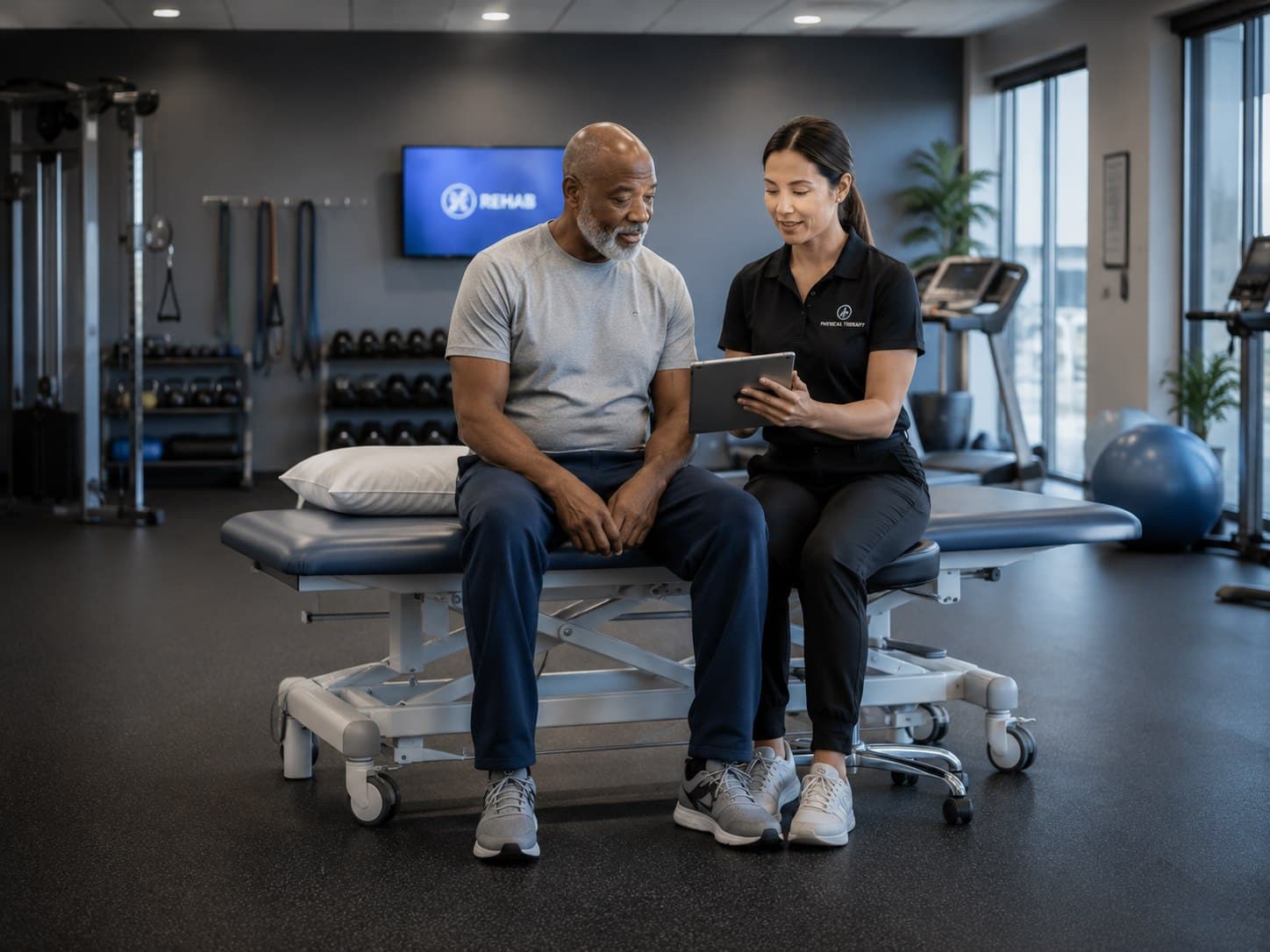
Recovery is individual
No two patients recover on exactly the same schedule. Age, overall health, strength, sleep, motivation, procedure type, and complexity all influence progress. Comparing your recovery to another patient, or even to the opposite joint, can create unnecessary frustration.
Milestones are useful, but they are not deadlines.
The first two weeks
Many patients begin standing and walking with assistance on the day of surgery. The early period focuses on:
- Managing swelling and protecting the incision
- Walking frequently for short periods
- Taking medications safely and preventing falls
- Beginning or continuing prescribed exercises
- Watching for warning signs
Pain and swelling are expected, though both should gradually become more manageable.
Weeks two through six, and beyond
During this stage, many patients notice meaningful improvements in mobility and independence: reducing reliance on assistive devices, improving motion, walking farther, resuming driving when safe, and reducing pain medication.
Recovery continues well beyond the early visits. Many patients keep improving in strength, endurance, balance, and confidence for a year or longer.
Connected recovery beyond the office visit
Traditional follow-up provides valuable snapshots of recovery: a visit, a conversation, an examination, imaging. Connected recovery can add information between those visits.
When appropriate, objective activity data may help show how mobility is changing over time. It does not replace your experience; it gives you and Dr. Seem another source of information to discuss together.
The mymobility app, for every hip and knee
Whether your hip or your knee is being replaced, Dr. Seem uses the mymobility app to support you before and after surgery with education, exercises, reminders, and recovery check-ins. It gives you a clear place to review guidance and stay engaged with the plan between visits.
The app is designed to reinforce care, not replace it. Your symptoms, concerns, and progress still guide decisions, and in-person evaluation remains available whenever needed.
Persona IQ, the smart knee
For select knee replacement patients, Persona IQ is a smart implant designed to collect objective movement information after surgery. That information may help Dr. Seem understand how your activity and walking pattern change over time, adding another layer of insight between office visits.
The data does not replace how you feel, what you report, or a physical examination. It helps create a more complete picture of recovery and can support more informed conversations about progress. When appropriate, Persona IQ may also help personalize follow-up while reducing unnecessary travel for patients whose recovery is progressing well.
Success is measured by life
A perfectly positioned implant does not automatically equal a successful outcome. Success means less pain, more confidence, greater mobility, and a return to valued activities. The X-ray matters, but your life matters more.
I am not treating your X-ray. I am treating what your joint is keeping you from doing.
When to call
Contact the care team promptly for concerns such as increasing redness or drainage, fever or chills, sudden worsening pain, new calf pain or marked leg swelling, or any symptom identified in your discharge instructions.
Chest pain or shortness of breath may require emergency evaluation. Call 911 or seek emergency care.
- How long does full recovery take?
- Meaningful improvement often occurs during the first several weeks and months, but strength, endurance, comfort, and confidence may continue improving for a year or longer.
- Is more pain a sign something is wrong?
- Not always. Activity-related soreness and swelling can occur as recovery progresses. Sudden, severe, or persistently worsening symptoms should be discussed with the care team.
- When will the joint feel normal?
- Awareness of the joint often decreases gradually as strength and confidence return. Some patients become largely unaware of the implant; others notice it during certain activities.
- Does connected recovery replace office visits?
- No. It may help personalize the timing and purpose of follow-up, but in-person evaluation remains an important part of care.
- Will the smart implant tell me if something is wrong?
- It may provide useful recovery trends, but it cannot independently diagnose a complication. Symptoms and concerns should still be communicated to the care team.
- Is a smart implant right for everyone?
- No. Implant and technology selection are individualized based on anatomy, clinical needs, preferences, and whether the technology offers meaningful benefit.
Next step
Ready to talk through your options with Dr. Seem?