Hip · Revision
When your hip replacement needs another solution.
Revision hip replacement is among the most technically demanding procedures in orthopaedic surgery. Every revision begins by understanding why the original replacement is no longer working as expected.
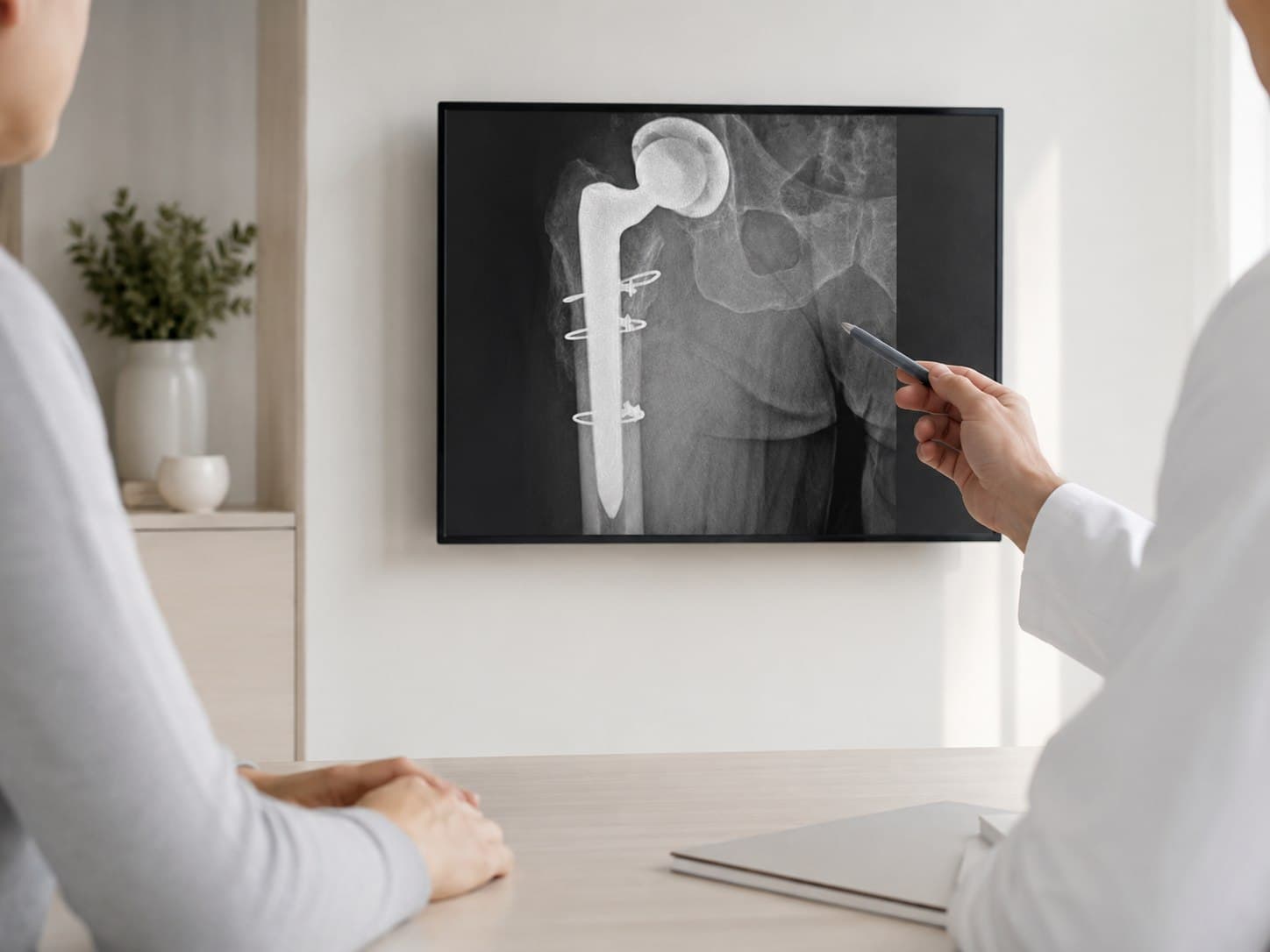
Finding the cause
Pain after hip replacement may result from implant loosening, infection, instability, wear, fracture, tendon problems, spinal conditions, or other causes. A careful evaluation, including history, examination, imaging, and laboratory testing, is essential before recommending surgery.
Individualized reconstruction
Every revision presents unique challenges. Previous implants, bone loss, soft-tissue quality, and patient goals all influence the surgical plan. Modern implants, advanced reconstruction techniques, and meticulous planning allow treatment to be tailored to each individual situation.
Recovery
Recovery depends on the complexity of the revision and the reason surgery is required. Some revisions resemble primary hip replacement, while others require a longer rehabilitation process. Throughout recovery, Dr. Seem emphasizes communication, education, and individualized follow-up so patients understand every step.
“The objective is never simply to replace an implant. It is to understand the problem, develop the right solution, and help patients return to living with confidence.”
Next step
Ready to talk through your options with Dr. Seem?